
Meet Agent Chip
Agent Chip is our AI assistant head coach, backed by a Second Brain: a growing, source-linked LLMwiki that helps us carry useful knowledge from one question to the next. The important part is not pretending the model knows everything. It is giving the model a map to evidence, and keeping the students in charge.
Not Another Foundation Model
Agent Chip is the assistant we use to help ask questions, connect ideas and plan experiments. The Second Brain is the durable knowledge layer behind that work: curated notes, source documents, claims, decisions and links between them. The model can change; the source trail and the team's learning should remain inspectable.
Our pattern is straightforward: capture a source, identify the claims it supports, preserve uncertainty, connect related concepts and retrieve only what a new question needs. A student's own testing and explanation still decide what becomes team knowledge.
A Graph That Keeps Its Receipts
A knowledge graph is more useful than a pile of disconnected PDFs when a robot question crosses hardware, code and rules. A component can link to its manufacturer data, the API that reads it, a decision-tree branch that uses it and the test that supports that branch. Each link has a type; an unverified idea stays visibly different from a measured result.

That is the LLMwiki idea in practice: build a small, navigable body of knowledge from sources instead of treating a long chat transcript as the team's memory. Research on memory management and knowledge caching gave us useful design vocabulary, but it does not certify our implementation.
From Invoice to Robot Knowledge
Our robot bill of materials starts with the parts we can identify from invoices and team records. We connect a part or SKU to the manufacturer specifications we have gathered, then to relevant FTC and programming references: connector and electrical limits, sensor behavior, SDK classes, configuration names and code examples. The cache is a curated set of sources for our identified parts, not a claim that we have every document a manufacturer has ever published.
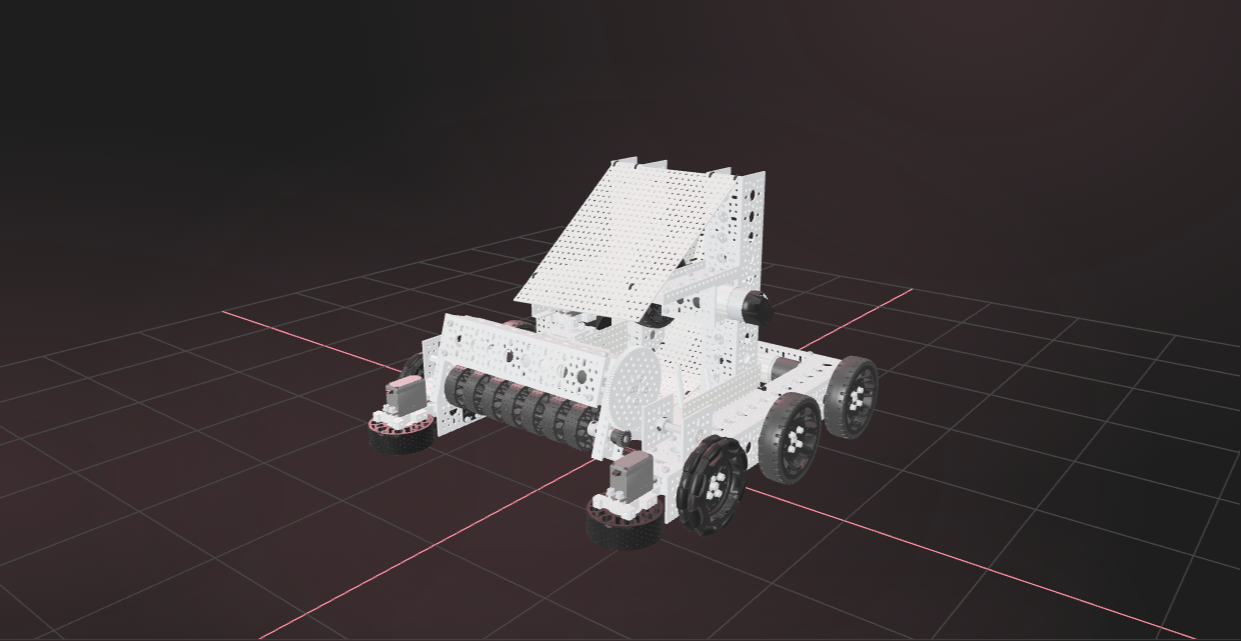
When a document is available locally, an offline lookup can still answer questions such as which interface a sensor uses, which SDK calls match the configured device and what evidence supports a proposed branch. Version, source and status matter: a vendor example is not the same thing as tested robot code, and neither replaces current FTC rules.
A Local Model, With Guardrails
We are shaping the cache so a local model such as Qwen could retrieve the relevant BOM, manufacturer and programming references without an internet connection, then help draft or explain a decision tree. That offline code-generation workflow is an in-progress goal, not a claim that Qwen has already generated a tested controller or runs the robot.

The point is not to let an AI invent a motor command. The point is to make the sources and constraints available, ask for a bounded proposal and keep a human review-and-test gate between that proposal and the machine.
Sources and Further Reading
- Packer et al., MemGPT: Towards LLMs as Operating Systems
arXiv:2310.08560. Its memory-tier and context-management ideas inform how we think about keeping durable knowledge available beyond one model conversation. Our wiki is not a reproduction of MemGPT.
- Jin et al., RAGCache: Efficient Knowledge Caching for Retrieval-Augmented Generation
arXiv:2404.12457. This work explores caching retrieved knowledge for faster RAG. Our local document cache and linked markdown knowledge graph are a different, smaller system.